
Bruxism: understanding tooth clenching and grinding
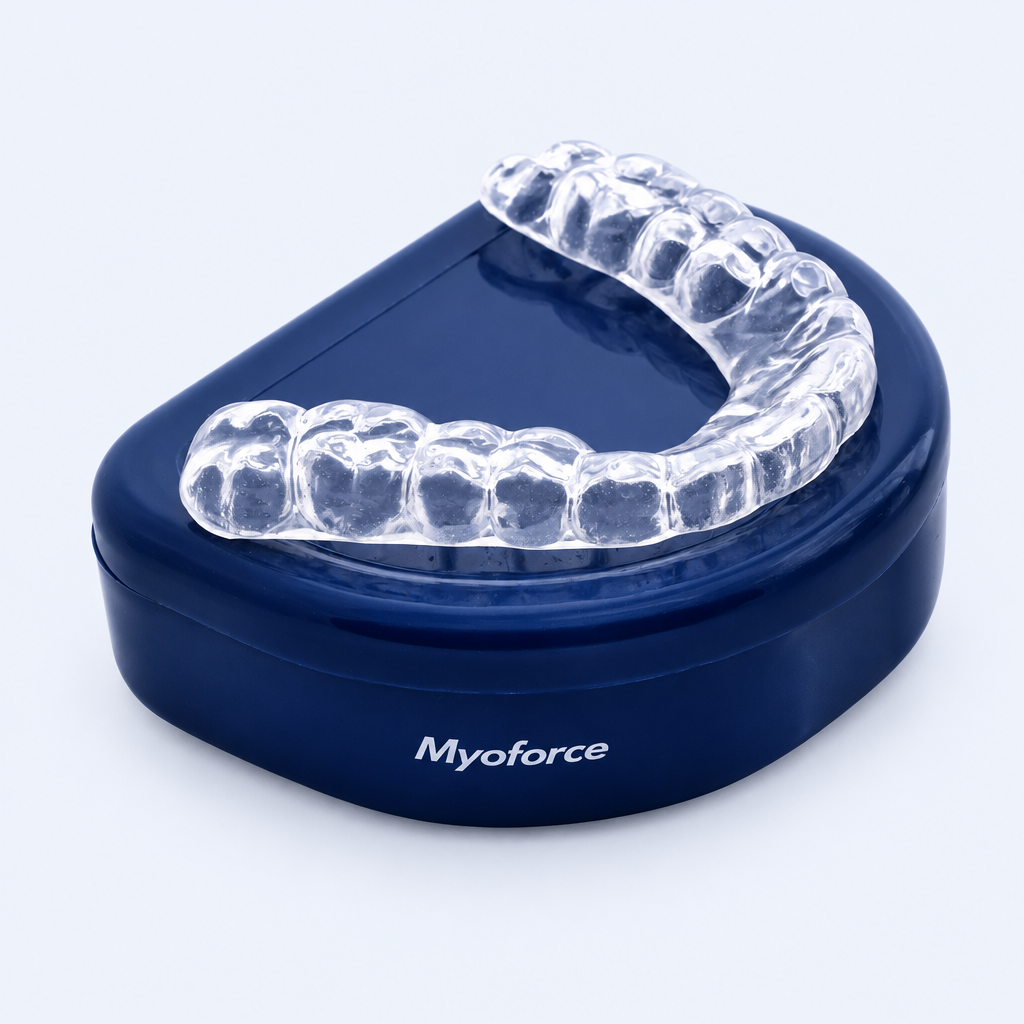

Bruxism is jaw-muscle activity that may involve clenching or grinding teeth. It can occur during sleep or while awake. The first question is whether it causes damage or discomfort, then how to respond appropriately. A guard does not guarantee an end to this activity.
Sleep and wakefulness: two distinct situations
The international consensus distinguishes sleep and awake bruxism. In otherwise healthy people, it describes bruxism as a behaviour, not automatically a disease. This distinction avoids treating every occasional tooth contact as a problem requiring care. International consensus on bruxism, Lobbezoo et al., 2018.
| Situation | What you may observe | Point to discuss at consultation |
|---|---|---|
| During sleep | Someone sometimes hears grinding; you do not control the movement | Reported frequency, tooth condition and sleep |
| During the day | You notice clenching during certain activities | Timing, sensations and habits |
How can you know whether you are affected?
Damaged or sensitive teeth, jaw-muscle fatigue and pain may prompt consultation. These signs are insufficient for self-diagnosis. The dentist examines teeth, restorations and painful areas in the context of your history. NIDCR, patient information on bruxism, 2025.
If difficulties mainly start on waking, see our guide to grinding at night. Prepare specific examples rather than an online diagnosis: how long, when and with what discomfort.
Which causes should be investigated?
Bruxism has no single explanation. Research describes several associated factors, including stress, some substances and medicines. Association does not prove that any one factor explains your case. The guide to bruxism causes explains this distinction and the information to bring to an appointment.
What a guard can offer
A guard sits between the teeth. Cochrane considers a benefit for wear possible, but the 2020 NIHR review found no trial directly measuring wear in people with bruxism. Distinguish the intended mechanical role from evidence of a guaranteed clinical result.
To compare models, start with the bruxism guard guide. Jaw pain, locking or a changed bite warrants examination before choosing an appliance.
MyoProtect, MyoForce's impression-based guard
MyoProtect is a custom guard made from a home impression. Its construction combines a hard outer layer and soft inner layer, 3 mm thick overall. Its listed price is €90. These features describe the product; they do not establish superior effectiveness or an end to bruxism.
View MyoProtect and its features to check the offer and prepare your questions.
Other options and follow-up
Follow-up may address dental protection, awake habits, stress or another associated difficulty. Expected outcomes should be defined: better understanding episodes, monitoring teeth or managing identified pain. The bruxism treatments and their limitations involve more than buying a guard.
For children, the approach must consider growth and dentition. The guide my child grinds their teeth is for parents; an adult guard should not be selected by simple extrapolation.
Common questions
Is bruxism always harmful?
No. Activity should be assessed according to consequences and context. Grinding heard once does not itself establish tooth condition.
Can bruxism be eliminated permanently?
Studies do not support promising a lasting cure from a guard. Goals and follow-up are discussed according to the situation.
Do ear pain or tinnitus prove bruxism?
No. Do not automatically attribute these symptoms to bruxism or expect a guard to make them disappear. Medical advice can investigate their cause.
Sources and update
- International consensus on bruxism, Lobbezoo et al., 2018
- Splints and sleep bruxism, Cochrane, 2007
- Splints, pain and wear: NIHR review, Riley et al., 2020
- Bruxism: umbrella review, Melo et al., 2019
- NIDCR, patient information on bruxism, 2025
Written by Dr Vladimir Khourda. Updated: 1 October 2026. This information helps explain the options; appliance choice depends on your dental circumstances.